By Restoration Advertising · 09/29/2026
Systems That Let a Restoration Company Take On More Jobs
A restoration company grows when calls, jobs and paperwork run through simple systems. What to set up first, what to measure, and when software helps.
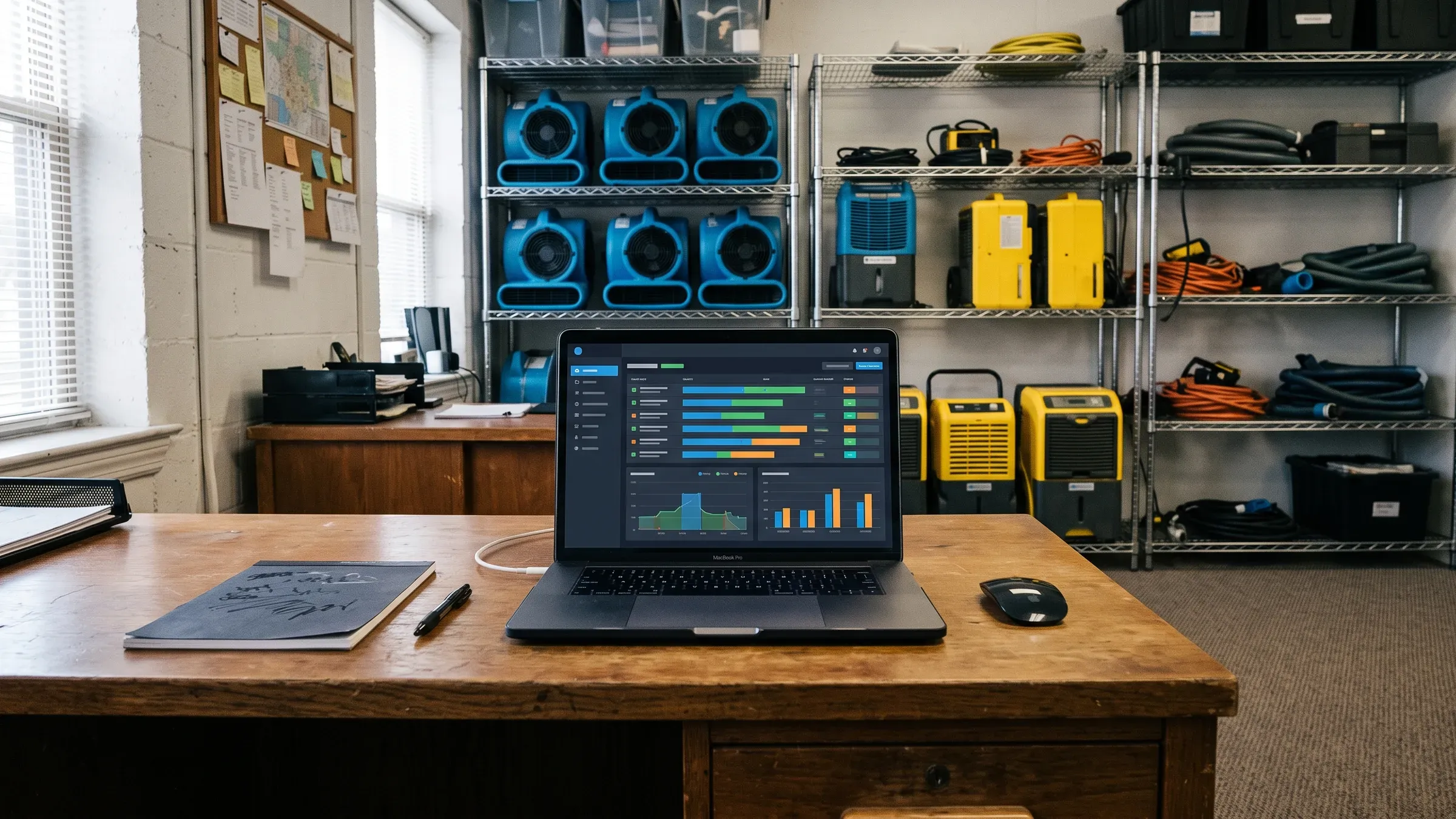
What stops a restoration company from taking more jobs?
Usually not a shortage of leads. It is the same few things: calls that don't get answered, jobs that stall between stages, paperwork that piles up, and a team that knows what to do only because the owner is standing next to them. Each new job makes those problems worse, until the owner is the limit on growth.
Systems fix that. A system here is not software. It is a written way of doing something that anyone on the team can follow, and that you can measure.
Where should you start?
At the front door. If the first call is handled well, everything after it goes better.
Five systems, in the order to build them
1. Intake
A script and a form for the first call: name, address, what happened, whether the water or fire is out, insurance, and who to call back. Every call is written down the same way.
2. Dispatch and on-call
Who answers after hours, who goes, and how they are told. Written down, with a backup.
3. Job tracking
One place where every job shows its stage and its next step, so nobody has to ask "where are we on the Smith job?"
4. Documentation
A standard set of photos, moisture readings and notes for every job. It protects you, it helps your insurer partners, and it gets you paid.
5. Follow-up
Ask for the review, thank the plumber or agent who referred the job, and check back after the work is done.
What should you measure?
Only a few numbers, and only the ones you will act on:
- What share of calls are answered, and how fast after hours.
- How long from the call to a technician on site.
- How many quotes turn into jobs, and where the ones you lost went.
- Where jobs come from: search, referrals, insurers, repeat customers.
- How many days from finished work to payment.
When does software help?
After the process works on paper. A spreadsheet and a shared calendar can run a small company well, and a job-management or CRM tool earns its cost when it removes a step you already do by hand. Buying software first, and then trying to fit the business to it, is how companies end up with an expensive tool half the team ignores. Choose something that fits how the work is actually done, and check that your team will use it.
What about growing the team?
Systems are what let you hand work off. Once intake, dispatch and documentation are written down, a new hire can learn them in days, and you stop being the person every job has to go through. That is the point at which more calls mean more jobs and not more chaos.
If you would like help working out where your company's systems, technology or marketing should go next, see For restoration companies.