By Restoration Advertising · 09/29/2026
The First 24 Hours After Water Damage
What to do in the first day after a flood, burst pipe or leak: make the house safe, stop the water, document it, and call for help before the damage spreads.
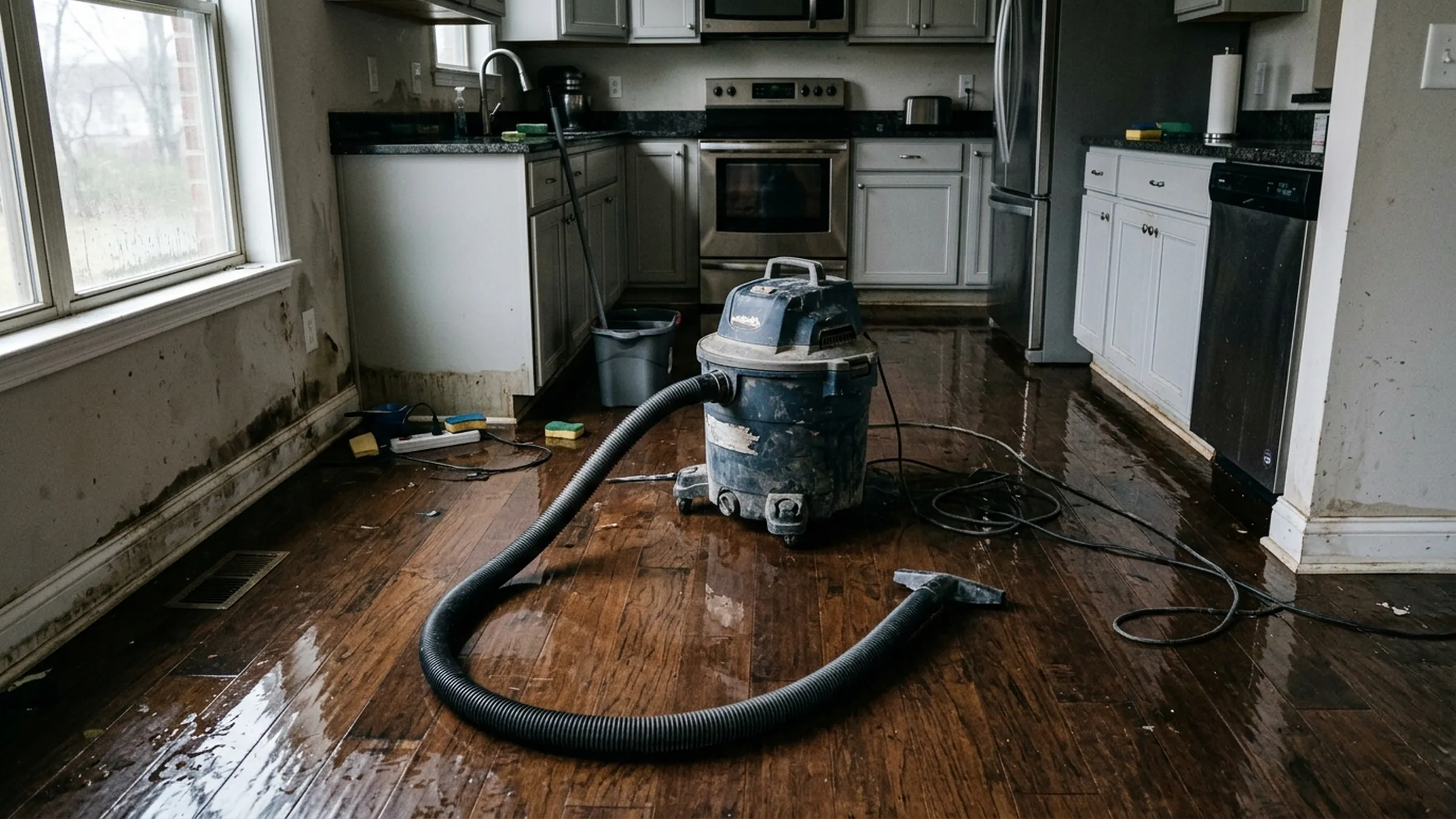
What should you do first after water damage?
Make the house safe, then stop the water. Water and electricity are the danger that comes before any repair, so the first question is whether anyone can be hurt.
If water is near outlets, appliances or the electrical panel, or a ceiling is sagging with water behind it, stay out of that area. Shut off power at the panel only if you can reach it without standing in water. If you can't, call your utility or an electrician. Get everyone, pets included, out of any room that isn't safe.
The first hours, in order
1. Stay safe
Keep out of rooms with water near electrical service, and out of any ceiling that is bulging or dripping heavily.
2. Stop the source
For a burst pipe or a leaking fixture, close the shutoff valve at the fixture or the main water valve. For rain or a flood, you can only limit what comes in next.
3. Photograph everything
Take photos and a slow video of the damage before you move anything. It is the record your insurer will ask for.
4. Make two calls
Call your insurance company to open a claim, and call a restoration company. Do both early: neither one waits for the other.
5. Remove what is safe to remove
Lift small furniture and wet rugs out of the water, pull up soaked cushions, and put anything valuable somewhere dry.
Why does the first day matter so much?
Wet materials keep soaking up water, and the longer they stay wet the more they cost to save. The EPA's guide to mold and moisture says that if wet or damp materials are dried within 24 to 48 hours after a leak or spill, in most cases mold will not grow (EPA: A Brief Guide to Mold, Moisture, and Your Home, updated February 18, 2026).
That window is why a small leak handled the same day is a cleanup, and the same leak left for a weekend can become drywall, insulation and flooring that have to be torn out.
What if the water is dirty?
Where the water came from decides how careful you have to be. Water from a broken supply line starts out clean, but it does not stay that way once it soaks into carpet and building materials. Floodwater and sewage backups are contaminated from the start.
Treat floodwater, sewage and anything that has been wet for more than a day or two as a job for professionals. Keep children and pets out, wear waterproof boots and gloves if you must go in, and wash well afterward.
What should you not do?
- Don't use an ordinary household vacuum on standing water. A wet/dry shop vacuum is made for it; a regular vacuum is not.
- Don't turn on ceiling lights or fans if water has collected in the ceiling above them.
- Don't use electronics or appliances while standing in water.
- Don't throw damaged items away before they are photographed and listed, unless they are unsanitary. Ask your insurer if you are unsure.
- Don't wait to see whether it dries by itself. A floor that feels dry on top can be wet underneath.
When should you call a restoration company?
Call one for anything more than a small spill you can mop up right away: standing water, water inside a wall or under flooring, a ceiling that has been wet, or any sewage or floodwater. A restoration company pulls out the water, dries the structure with air movers and dehumidifiers, and measures moisture in the materials so you know when they are actually dry. That last step is the one people cannot do by feel.
You can browse water damage restoration companies in the directory. Before you hire anyone, ask whether they are licensed and insured where you live, whether they will give you a written estimate, how they document the drying, and how soon they can be at the house. The directory lists companies and does not vet or rate any of them, so ask the questions above of every company you call.