By Restoration Advertising · 09/29/2026
Water Extraction and Drying: What to Expect
What a restoration company does after a flood or leak, why drying takes days rather than hours, and how you can tell the structure is actually dry.
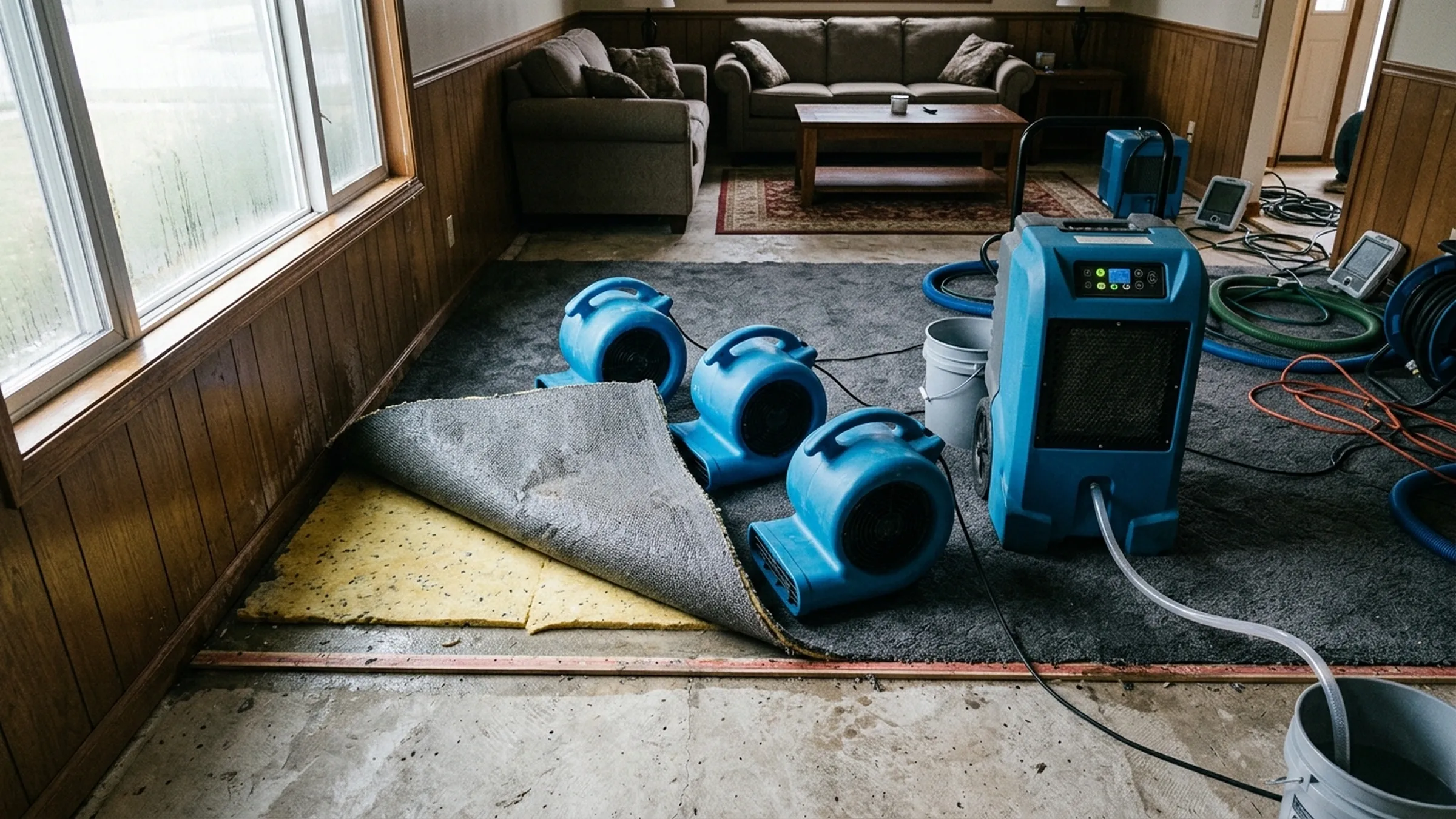
What happens first when a restoration company arrives?
They look before they touch. A technician finds where the water came from, checks that it has been stopped, and works out how far it has traveled, because water rarely stays where it landed. It wicks up walls, runs under flooring and settles into insulation.
Then comes extraction: pumps and wet/dry vacuums remove standing water, and wet carpet and pad are often lifted out. Getting the bulk water out first matters, because equipment can only dry what is left in the materials.
The stages of a drying job
Inspect and map
Moisture meters and sometimes thermal cameras show which walls, floors and ceilings are wet, including places you cannot see.
Extract
Standing water is pumped or vacuumed out before anything else, since it is the fastest way to reduce the drying load.
Remove what cannot be saved
Soaked pad, wet insulation and drywall that has crumbled or been in contaminated water are usually cut out.
Dry
Air movers push air across wet surfaces while dehumidifiers pull the moisture out of the air, so it is not just moved around the house.
Monitor
The technician returns, often daily, to take readings and move or remove equipment as areas dry.
Confirm
The job ends when readings in the affected materials match dry readings from unaffected materials of the same kind.
How long does drying take?
Often several days, and longer when the water was deep, the materials are dense, or it got behind walls or under hardwood. A company that promises a finish time before it has taken readings is guessing. The honest answer is "we will know after we measure, and we will measure every day."
Why does the equipment run all day?
Drying is a physical process, and it goes faster when the air stays dry and moving. The fans and dehumidifiers are loud, and they use a lot of electricity, but turning them off early leaves moisture in the framing, and that is how mold and rot begin. Ask the company to explain the plan and how long they expect to run the equipment.
How can you tell it is really dry?
You can't by touch. A wall or floor can feel dry and still hold enough moisture to grow mold. Ask for the moisture readings, the dry standard they compared them to, and the date each area was cleared. Those numbers are also worth keeping for your insurer.
What should you ask before you hire?
- Do they measure moisture and log it at every visit?
- Will they give a written estimate and explain what may change it?
- How will they protect the rest of the house while they work?
- Who is on site, and how soon can they start?
You can browse water damage restoration companies in the directory. The directory lists companies and does not vet or rate any of them, so ask the questions above of every company you call.