By Restoration Advertising · 11/14/2026
Smoke Damage After a Kitchen Fire: Clean It or Call a Pro?
After a small kitchen fire: a wipe test to grade the smoke damage, which residue you can clean yourself, what to throw out, and when insurance pays.
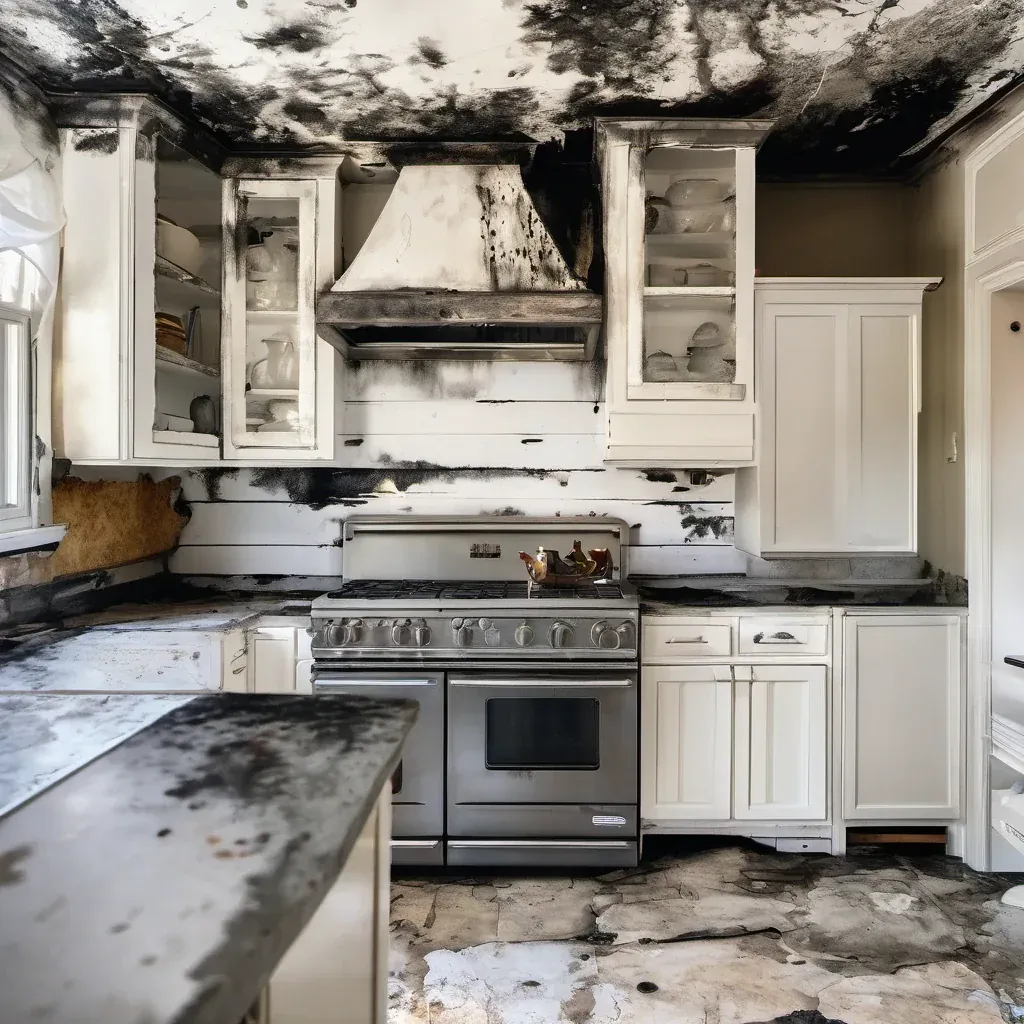
After a small kitchen fire, you can usually clean the smoke damage yourself if the smell is confined to the kitchen and an alcohol wipe on a bare surface comes back clean (FEMA's "light" category) or shows only a light amount of soot ("moderate"). Call a professional when soot is visible in other rooms, the residue is greasy or sticky, plastic melted, the smell survives a full cleaning, or anything in the walls, wiring or ducts may be involved. FEMA's guide gives a test to tell which.
How bad is the smoke damage? Run a wipe test
FEMA's homeowner's guide to residential smoke damage (revised April 2025) grades each room with a wipe test. Put on clean gloves, wipe an unfinished horizontal surface (bare wood, the top of a door frame) with a prepackaged alcohol wipe, and look at the wipe. Our suggestion, not FEMA's: go room by room, moving away from the kitchen. FEMA suggests bagging and labeling each wipe and photographing the results for your insurer.
| What you find | FEMA's category | Who cleans it |
|---|---|---|
| No soot on surfaces, no smell | None | Nothing to do |
| Smoke smell, but the wipe is clean | Light | You, with the four simple steps below |
| Light soot on surfaces, particles in the air, smell | Moderate | You, with detailed cleaning, if simple steps fail |
| Heavy soot on surfaces and floors | Heavy | A professional cleaning or restoration company |
| Visible fire damage to the structure or contents | Other | Do not go in until the fire department clears it; professionals for both fire and smoke |
The guide was written after Colorado's Marshall Fire, for wildfire smoke. A kitchen fire is a different source, closer and usually greasier, so we would treat FEMA's thresholds as a floor. That is our judgment, not FEMA's: a kitchen fire that grades "moderate" two rooms away is probably a bigger job than wildfire smoke at the same grade.
Which kinds of smoke residue can you clean yourself?
What burned decides what is left behind. In a kitchen that is usually food and fat rather than wood and paper (our inference).
The residue types below are our own summary of how the restoration trade usually describes them. We found no government guide or standard that defines them, so the "what it looks like" column is not sourced, and the DIY column is our inference from FEMA's categories. Use it to know what to expect, not as an authority.
| Residue | What it looks like | DIY? |
|---|---|---|
| Dry soot | Powdery, gray or black, smudges if rubbed | Often, if light: vacuum first, then damp-wipe |
| Wet or oily soot | Sticky, smears, dark film | Small areas only; widespread film needs a pro |
| Protein residue | Nearly invisible yellowish film, strong lingering smell | Hard: the smell is the clue, and odor treatment is usually professional |
| Melted plastic | Black, greasy, acrid | Pro, if beyond the stovetop |
FEMA warns that fire residue left too long can permanently etch metal, and that porous materials such as upholstery can become nearly impossible to clean. Speed matters.
How do you clean light or moderate smoke damage safely?
Light damage (smell, no soot): FEMA's four steps
- Air it out. Open windows and doors.
- Filter. Put a new MERV 11 or higher filter in the furnace or air handler and run the fan on constant mode.
- Absorb. Set out activated charcoal. FEMA says to avoid odor-masking products, which do not remove smoke odor and add new smells that make it harder to find the source.
- Clean the soft goods in the room that smells worst: curtains, linens, cushion covers.
Moderate damage (light soot)
- Protect yourself: goggles and an N95 or P100 respirator, long sleeves. USFA's "After the Fire" guide warns that soot can contain things that make you sick.
- Vacuum before you wipe: use a HEPA-filtered vacuum on carpet and upholstery; Utah State University Extension adds that you should change the vacuum filter often. Vacuuming comes before any wet cleaning, so loose soot is lifted rather than smeared.
- Damp-wipe top down with water and a mild detergent, ceilings first. Test a hidden spot first; expect more than one pass.
- Dishes and utensils with visible soot can be run through the dishwasher or hand washed with dish soap and warm water (FEMA).
- Never mix cleaners: USU Extension warns that mixing chlorine products with ammonia makes a toxic gas.
- Turn off power to electronics before cleaning them.
If the smell is still there after this, stop and get a professional assessment. Smoke that has soaked into porous materials such as drywall, cabinet backs or insulation is not reached by surface cleaning; our piece on smoke damage you can't see, and why the smell comes back explains why, and what a professional does about it.
Why does the smell linger after a kitchen fire?
USU Extension recommends steam cleaning because steam melts the tar and neutralizes the odor and carbon film that fire leaves behind, and FEMA says odor-masking products do not eliminate smoke odor. Kitchen fires may add a second problem. This part is our inference, not a sourced finding: residue from burned food can be pale and hard to see, so a counter can look clean and still smell. If your nose finds the smell and your eyes cannot find the residue, do-it-yourself cleaning usually stops working.
What should you do about the heating and cooling system?
Leave the air handler off until the bulk of the soot is gone, because running it earlier spreads particles to rooms you have cleaned. Then:
- Tape cheesecloth or similar light fabric over the registers before restarting, to catch what the ducts blow out.
- Install a new MERV 11 or higher filter and run the fan constantly.
- USU Extension says to change filters at least monthly for the first year.
For moderate damage, FEMA recommends having the ducts and furnace professionally cleaned. One check we suggest, which is our idea and not FEMA's: look at the cheesecloth after a day of running. If it has turned gray, soot is probably moving through the ducts, which is a good reason to ask a professional about duct cleaning.
What food, medicine and kitchen items should you throw away?
The two government sources we checked disagree. FEMA's wildfire guide says open food must go but unopened boxed and canned pantry items can be wiped clean. The Virginia Department of Health (updated January 23, 2026), writing about food near a fire, says to discard it all: refrigerated and frozen food, because refrigerator seals are not airtight, and cans and jars, because heat can damage them and activate spoilage bacteria.
The difference is heat. FEMA was describing smoke drifting into a house; a kitchen fire puts heat on the food stored beside it.
| Item | Discard or keep |
|---|---|
| Anything open, or near the stove or the fire | Discard |
| Refrigerator and freezer contents in a smoky kitchen | Discard (Virginia Department of Health) |
| Cans and jars that were near the heat | Discard |
| Sealed pantry goods in another room, smoke smell only | Wipe and keep (FEMA) |
| Pacifiers, baby bottles, CPAP masks and tubing | Replace (FEMA) |
| Pots and pans | Wash with soap and hot water; if firefighting chemicals reached them, soak 15 minutes in 1 tablespoon of unscented bleach per gallon of water (Virginia Department of Health) |
Photograph everything you throw out first. For other belongings, see what can be saved after a house fire.
Will insurance pay for professional smoke cleaning?
Often, but it depends on your policy and state. The Insurance Information Institute marks fire and smoke as covered perils on every form in its coverage table (HO-1, HO-2, HO-3, HO-4, HO-6 and HO-8), and also tells you to check your own policy for the perils it covers and excludes.
What decides it in practice:
- Ask before you hire. USFA says to ask whether you or your insurer will pay for cleaning, and to get the estimate in writing. FEMA says to tell your insurer you are hiring a cleaning company; it may have a list to choose from.
- Weigh it against your deductible. A small cleanup may cost less than your deductible. Get the estimate first.
- Pay in stages. FEMA notes claims are often paid in installments and says not to pay a contractor in full until the work is done.
- Keep receipts for everything, including what you buy to clean yourself (USFA).
If your insurer and you disagree about what the policy covers, your state insurance department handles consumer questions. Before you sign anything, read our guide to reading a restoration estimate.
When to call a professional
- Soot shows on the wipe test outside the kitchen.
- The residue is sticky or greasy beyond the stove and the wall behind it.
- Plastic or an appliance melted.
- The smell is still there after the light and moderate steps.
- Any wiring, outlet, hood or wall was scorched.
- Anyone in the house has asthma or breathing problems. USU Extension advises people with respiratory problems to avoid the cleanup, and FEMA lists worsening asthma among smoke's health effects.
Researched and drafted with AI, then reviewed and edited by the site's editors.