By Restoration Advertising · 09/29/2026
Documenting Your Loss Before the Cleanup Starts
Photos, video and a written list made before anything is moved or thrown away make a claim easier to support. What to record, what to keep, and what to leave alone.
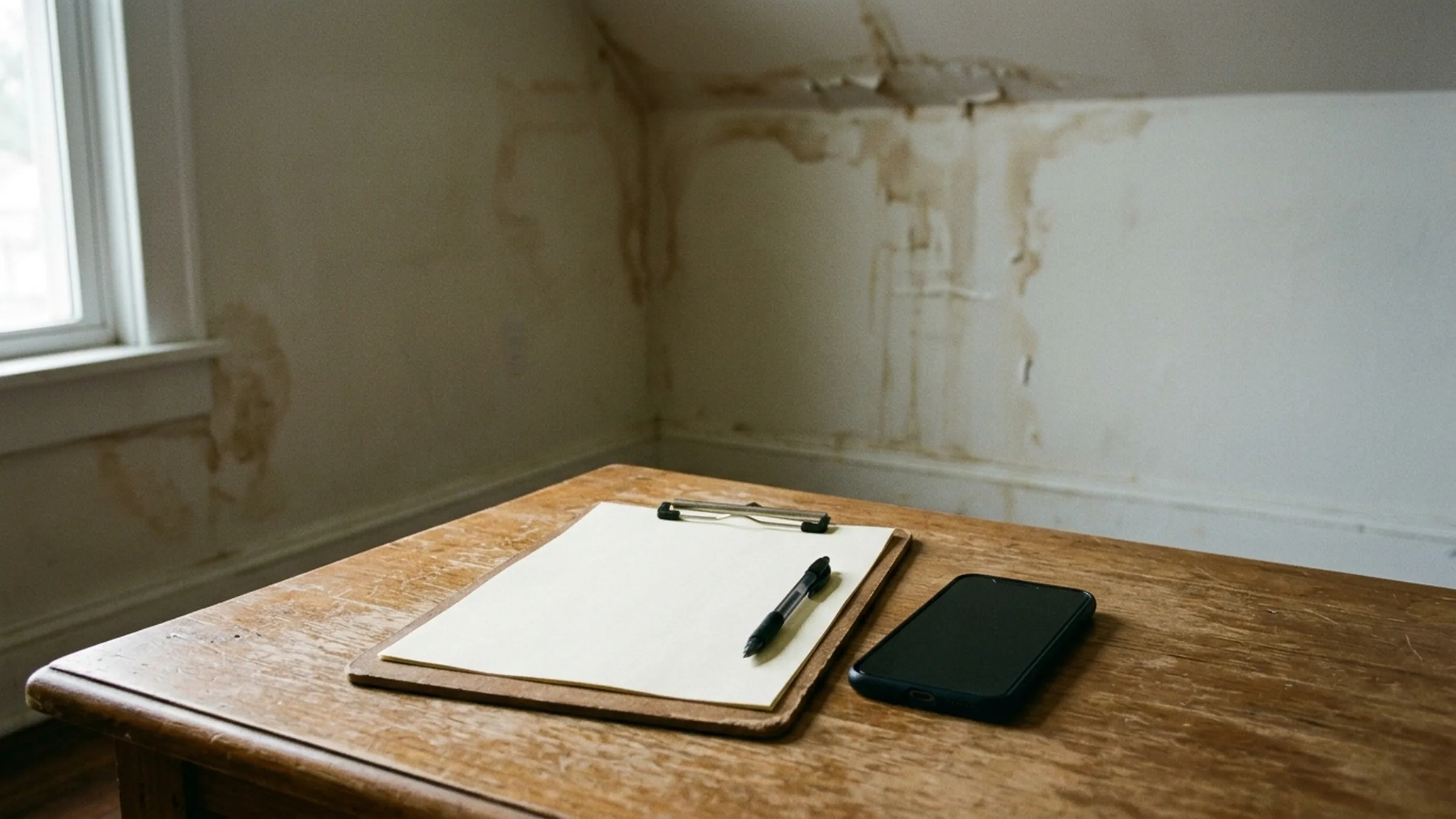
This is general information, not legal or coverage advice. Policies and state rules differ, so read your own policy and ask your insurer or agent what applies to you.
Why should you document the damage before cleanup?
Because cleanup changes the evidence. Once water is pumped out, drywall is cut and ruined belongings go to the curb, the only proof of what was there is what you recorded. Your insurer's adjuster may not see the house for days, and you will be asked to show the loss as it was.
Do this after everyone is safe and the source of the damage is stopped. Records come after safety, not before.
What to record
Every room, wide and close
One wide shot of each affected room, then close-ups of water lines, ceiling stains, soot, hail marks or broken materials.
A narrated video
Walk through slowly and say what you are looking at. It captures things a still photo misses, and it puts a date on the record.
The source
The burst pipe, the failed appliance, the hole in the roof. Photograph it before it is repaired.
Damaged belongings
Photograph each item, including brand, model and serial number labels where you can find them.
Moisture readings
If a restoration company takes moisture readings, ask for a copy. They show how wet the structure was and when it dried.
What should the written list include?
Make an inventory, room by room: what each item is, roughly how old it is, what you paid, and where you bought it. Receipts, bank or card statements, and older photos in your phone or on social media can all show that you owned something and what condition it was in.
Keep damaged items if you can do so safely, or at least photograph them well, until the adjuster says otherwise. Keep a small sample of flooring, tile or wall material if it is being replaced, so the type can be matched. Sewage-contaminated and moldy items are the exception: they are unsafe to keep, so photograph them well first.
Do you still have to protect the house?
Yes. Policies generally expect you to take reasonable steps to prevent further damage, such as stopping the leak, covering a roof opening with a tarp, boarding up a broken window, and having standing water removed. Keep the receipts for all of it, and ask your insurer how temporary repairs are handled under your policy. Don't skip them to save the evidence: the damage getting worse while you wait is itself a problem for the claim.
What else is worth keeping?
- A call log. The date, the name of each person you spoke with, your claim number, and what was said.
- Every receipt. Emergency repairs, supplies, and, if your policy has coverage for additional living expenses, hotel and meal costs. Ask your insurer whether yours does.
- Every letter and email from the insurer and from any company you hire.
What should you be careful about signing?
Read every contract before you sign it, especially any form that assigns your insurance benefits to a contractor. In some states an assignment of benefits is restricted or not allowed, and signing one can limit what you can do with your own claim. If a document is not clear, ask your insurer or a licensed public adjuster or attorney where you live before you sign it.
A restoration company can be a real help with documentation, since good ones photograph the job and record moisture readings as they work. You can browse water damage restoration companies in the directory. The directory lists companies and does not vet or rate any of them, so ask the questions above of every company you call.