By Restoration Advertising · 09/30/2026
Mold Inspector vs. Remediator: How to Tell the Roles Apart
Mold inspectors and remediators do different jobs. Why one company doing both is a conflict of interest, what state rules exist, and what to ask before you hire.
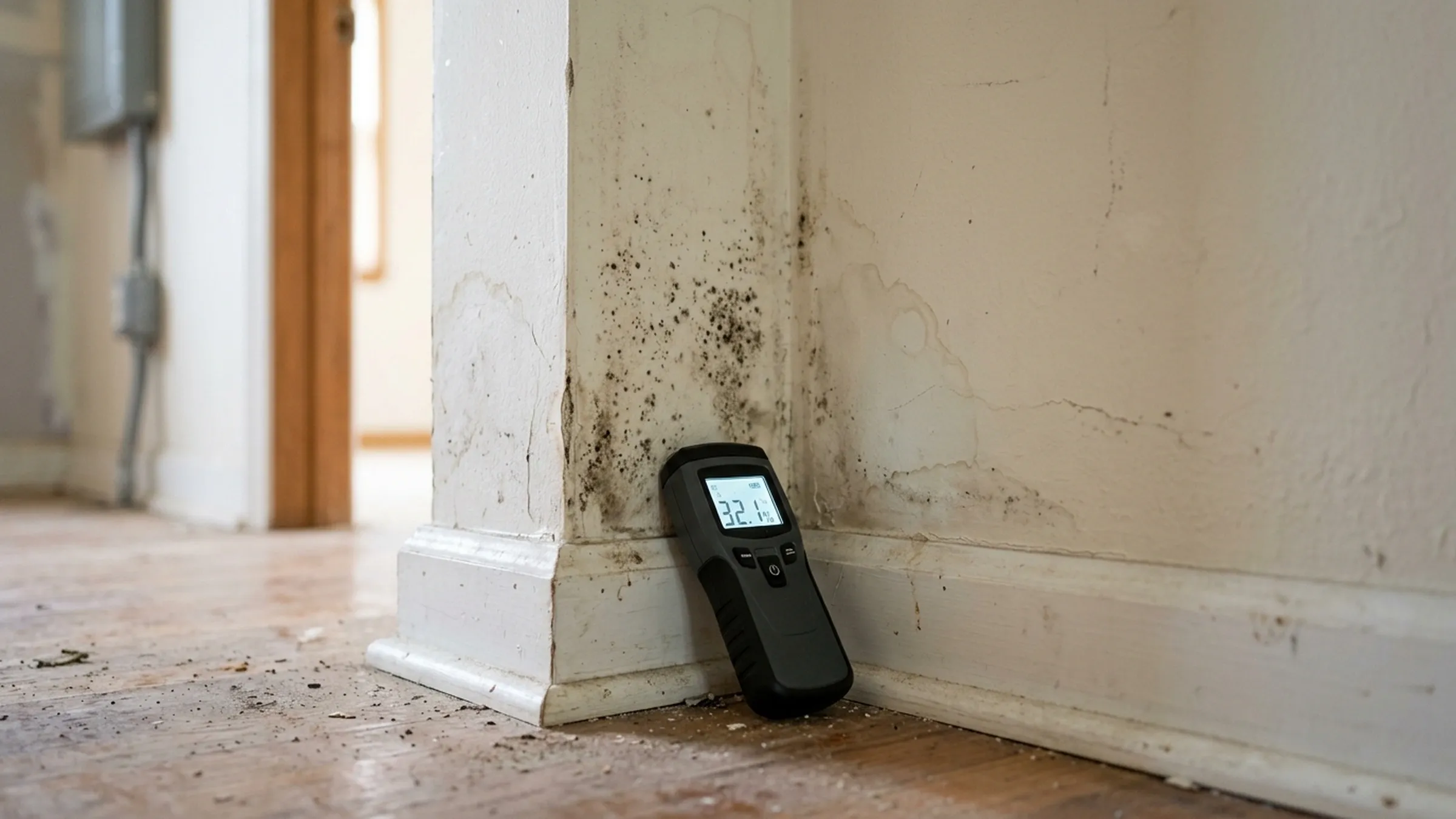
What does a mold inspector do, and what does a remediator do?
An inspector, sometimes called an assessor or consultant, looks for mold and for the moisture that feeds it. The inspector may take samples, and should write up what was found and what needs to be done about it. A remediator does the physical work: sealing off the area, removing materials that cannot be saved, cleaning and drying what can.
Put simply, one diagnoses and writes the plan, and the other carries it out. Some companies do both, and some states treat those as separate licenses.
Why is one company doing both a conflict of interest?
Think of a mechanic who both diagnoses your car and is paid to fix it. The bigger the diagnosis, the bigger the bill. A common recommendation is that the person who decides how much mold there is, and whether the job is finished, should not be the person paid to remove it. That is advice, not proof that any given company is dishonest, and many companies that offer both are careful and honest.
Some states have written the separation into law. Texas' licensing department says you are not allowed to conduct both mold assessment and mold remediation on the same project, with an exception for school district employees working on that district's own projects (Texas Department of Licensing and Regulation: mold FAQ, page undated). Florida bars a mold assessor from performing remediation on a structure the assessor's company assessed within the last 12 months, with an exception for certain licensed contractors (Florida Statutes, section 468.8419, 2025 statutes). New York's Department of Labor says its law prohibits performing both assessment and remediation on the same property and requires an independent assessment to define the scope of the work (New York State Department of Labor: Mold Program, page undated).
Does your state license mold work?
Some do and many do not. Texas, Florida and New York are among those that license mold assessors and remediators. In a state with no mold license, anyone can say they do this work, so the credentials, references and paperwork matter more. Check your state. Start with your state health department or the licensing agency that covers contractors, and ask whether mold work is regulated where you live.
Who does what, and what the paperwork is
Inspector or assessor
Looks for mold and moisture sources, may sample, and writes a report and a plan. Has no stake in how much work follows, which is the point of keeping this role separate.
Remediator
Contains the area, removes and cleans materials, and dries the space, following the plan. Should not be the one declaring the job a success.
Written remediation protocol
A document that says what areas are affected, what will be removed or cleaned, how the area will be contained and what counts as done. Ask for it before work starts.
Post-remediation verification
A check after the work, by someone independent where possible, that the mold is gone, the materials are dry and nothing was missed. New York requires a post-remediation assessment, and Texas has a certificate issued on completion.
Sampling
A way to gather information, not a verdict. The EPA says there are no federal limits for mold spores, so a sample cannot show a home meets a federal standard.
A license, where your state has one
Ask for the license number and look it up with the state. Where there is no license, ask about training, experience and references.
What does the EPA say about testing?
Less than people expect. The EPA says that in most cases, if visible mold growth is present, sampling is unnecessary, because no federal limits have been set for mold or mold spores (EPA: A Brief Guide to Mold, Moisture, and Your Home, updated February 18, 2026). It adds that surface sampling may help confirm that cleanup was adequate, and that testing should be done by experienced professionals. We cover this in Mold After Water Damage: Testing and Remediation. If you can see mold, the question is usually how to fix the moisture and remove the growth, not whether to test.
Testing makes more sense when the source is unclear, or when a contract, a lease or an insurer calls for proof. In those cases, the recommendation above applies: have the person who tests be someone other than the company doing the removal.
How do you tell the roles apart before you sign?
Ask every company what they do and what they do not. A company that inspects for free and quotes removal in the same visit is acting as both. That may be allowed where you live, but you should know it, and you can still ask for the protocol in writing and for a separate check at the end.
What should you ask?
- Are you licensed for assessment, remediation or both in this state, and what is the license number?
- Will the plan be in writing, and will it list what is removed, what is cleaned and how the area is contained?
- Do you own or share ownership in the company that would do the removal, or the company that would check it?
- How will the job be verified, and by whom?
- Will you tell me the moisture source and what you did about it?
- Can I see references from recent mold jobs?
You can browse mold remediation companies in the directory. The directory lists companies and does not vet or rate any of them, so ask the questions above of every company you call.