By Restoration Advertising · 09/29/2026
After Hail and Wind: Tarps, Board-Up and Storm Chasers
How to make a storm-damaged house safe, what temporary repairs to do first, and how to spot the out-of-town contractors who show up after every big storm.
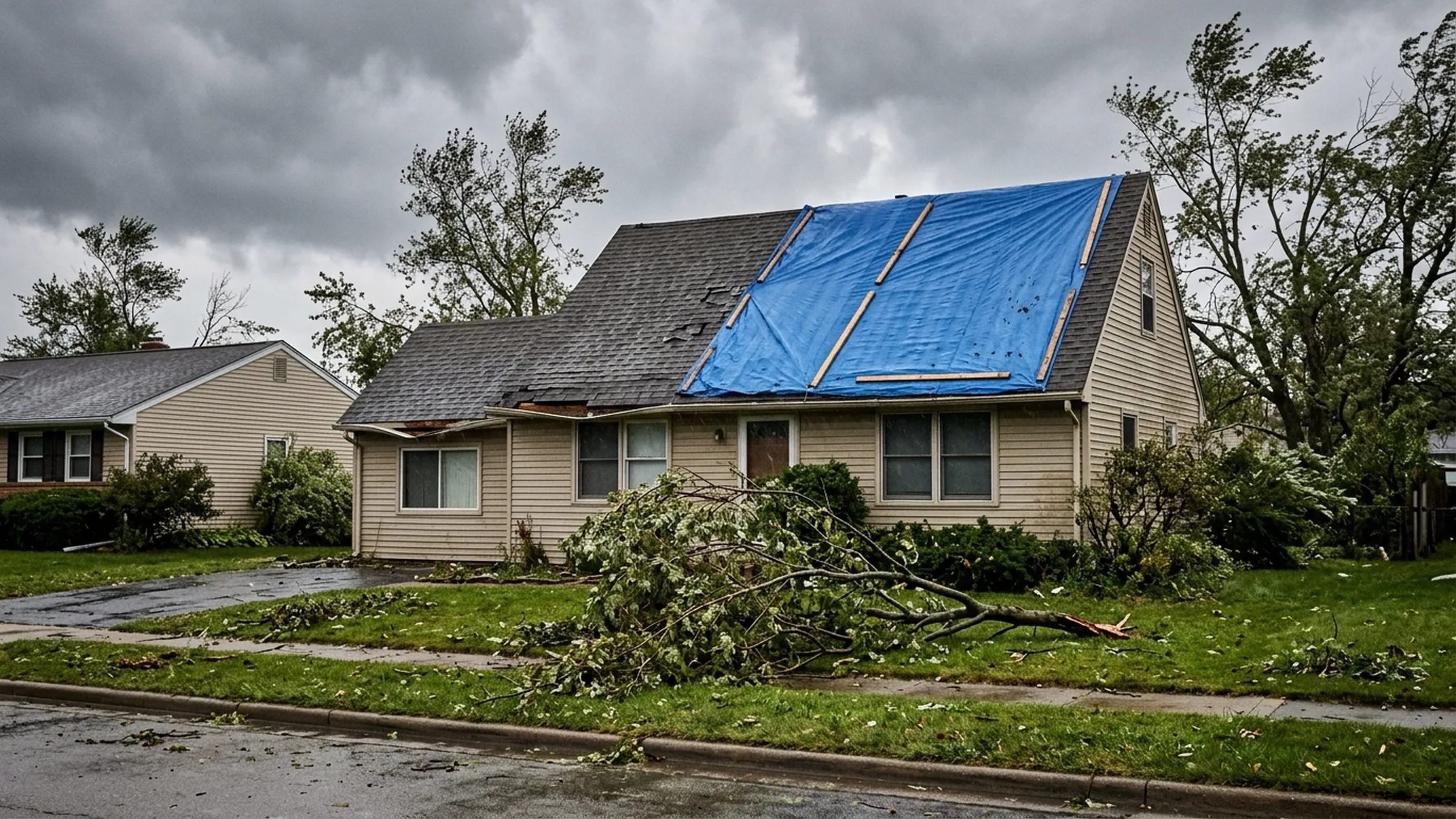
What should you do first after a storm?
Check that everyone is safe, then check the house from the ground. Stay away from downed power lines, and assume any fallen wire is live. Do not climb onto a damaged roof: it may not hold your weight, and it is wet, and a roofer or inspector can look at it safely.
Then stop more damage from happening. Water coming through a hole is a second disaster on top of the first.
What are tarping and board-up?
They are temporary repairs. A roofer or restoration company covers a damaged roof with a heavy tarp, and boards over a broken window or door, so rain and animals stay out until permanent repairs are done. Most insurance policies expect you to take reasonable steps to prevent further damage, and often cover the reasonable cost. Keep every receipt, photograph the damage before the tarp goes on, and ask your insurer how temporary repairs are handled under your policy.
The first day after a storm
Photograph the damage
Roof, siding, windows, gutters, fences and anything inside that got wet. Do it before repairs, and include wide shots and close-ups.
Call your insurer
Open a claim early. Ask about deadlines and how they want temporary repairs handled.
Cover the openings
Tarp the roof and board up windows, or have a company do it. Keep the receipts.
Dry out the inside
If water got in, a restoration company can extract and dry it. It is the same first-24-hours problem as any water damage.
What is a storm chaser, and how do you spot one?
After a big hail or wind event, contractors from out of the area often go door to door. Many are honest. Some are not, and the pattern is familiar, which makes it easy to watch for:
- Pressure. "I can only hold this price today" or "sign now before the adjuster comes."
- Money up front. A large deposit, cash only, or a request to pay before the work starts.
- Deductible tricks. An offer to cover or waive your deductible. In many states this is illegal, and it can put your claim at risk.
- A form that assigns your claim. Read any contract carefully before you sign, especially one that hands your insurance benefits to the contractor.
- No local footprint. No local address, license or insurance you can verify, and a truck with out-of-state plates and no reviews you can trace.
How do you check a contractor?
Ask for their license number and proof of insurance and check both with your state or local licensing office. Get a written estimate and a written contract, and get more than one bid. Ask for local references and go look at a finished job. A contractor who has been in your area for years will still be there when the warranty matters.
How do you know whether hail actually damaged the roof?
Hail damage is often hard to see from the ground, and it is a good reason to have more than one opinion. Your insurer's adjuster will inspect it, and a licensed roofer can inspect it for you. Be careful of anyone who says they found damage without showing you the photos.
You can browse storm damage restoration companies and roofing companies in the directory. The directory lists companies and does not vet or rate any of them, so ask the questions above of every company you call.