Articles
Storm Damage
Wind, hail and flood damage from storms: making the house safe, tarping and board-up, and the repairs that follow.
After a storm, make the house safe first, record the damage second and hire third. The guide below covers tarps, board-up and the contractors who knock on the door after hail. If anyone is in danger, call 911 first.
Stay safe
- Downed lines. Ready.gov says: "Underground or downed power lines can electrically charge the water." It also says: "Do not touch electrical equipment if it is wet or if you are standing in water." (Ready.gov, hurricanes, updated 09/24/2026)
- Generators. The CDC says: "never use generators, grills, or other gasoline-, propane-, or charcoal-burning devices inside your home, garage, or carport or near doors, windows, or vents," and that carbon monoxide "kills more than 500 Americans each year." (CDC, avoiding carbon monoxide poisoning, reviewed August 26, 2026)
Record the damage
Ready.gov says: "Document any property damage with photographs. Contact your insurance company for assistance." (same Ready.gov hurricanes page)
Hiring after a storm
FEMA's fact sheet on post-disaster contractor fraud advises "using a local contractor, someone who is known in the community," and says: "Verify the contractor's license and insurance" and "Get two or three written estimates." (FEMA, beware of post-disaster contractor fraud, September 9, 2025)
Start here
- Roof and walls open: After Hail and Wind: Tarps, Board-Up and Storm Chasers
- Ready to hire: browse storm damage restoration companies and roofing companies.
Where to get help
DisasterAssistance.gov, an official FEMA site, says: "We can help you apply for FEMA disaster assistance and guide you to other resources to help you recover."
Sources, each read on 10/05/2026: the Ready.gov, CDC, FEMA and DisasterAssistance.gov pages above. This is general guidance, not advice for your home.
Everything in Storm Damage
09/29/2026
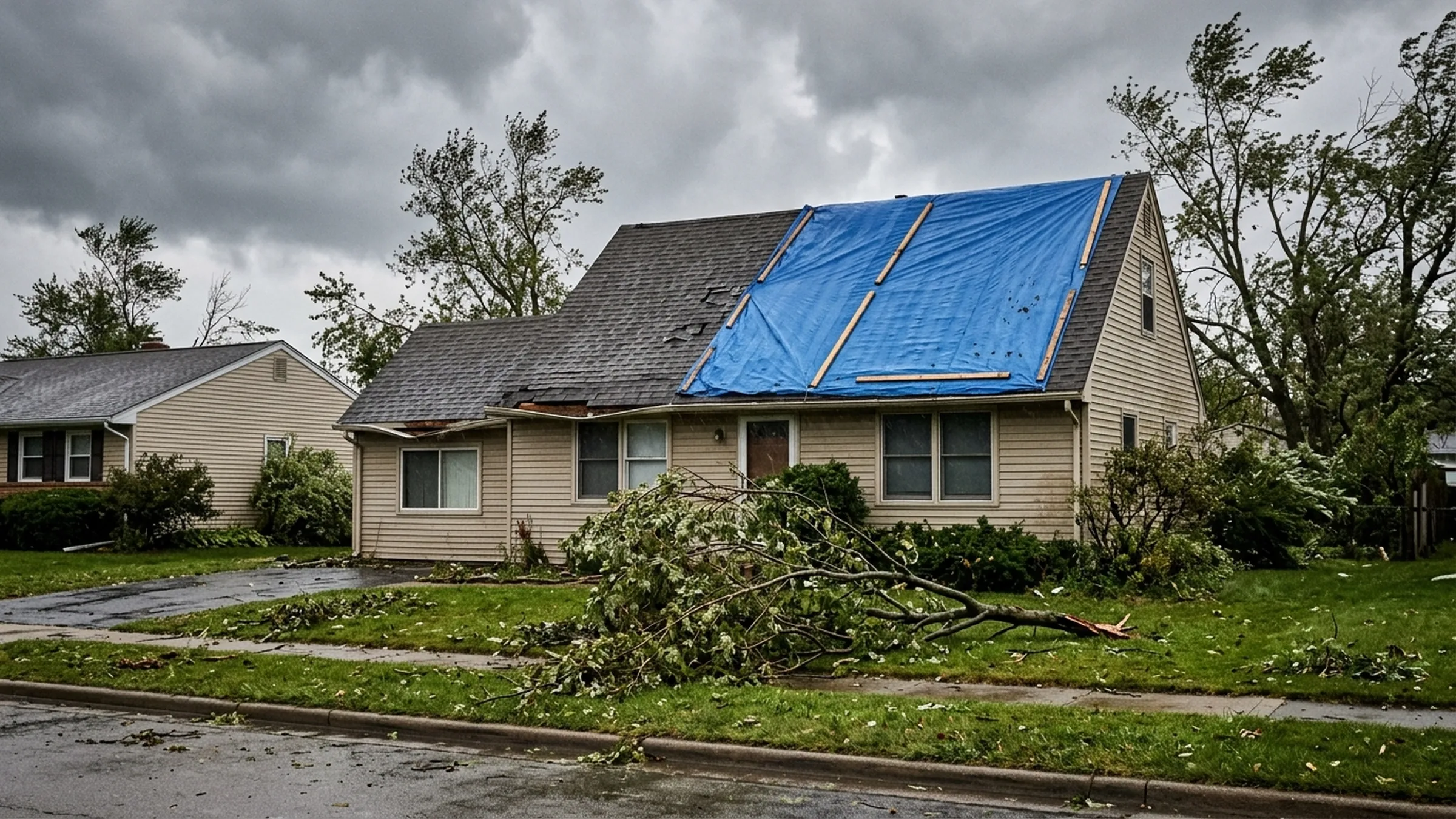
After Hail and Wind: Tarps, Board-Up and Storm Chasers
How to make a storm-damaged house safe, what temporary repairs to do first, and how to spot the out-of-town contractors who show up after every big storm.