By Restoration Advertising · 09/29/2026
Before-and-After Content That Wins Jobs, With Permission
Why before-and-after work convinces homeowners, how to shoot it so the two pictures match, and how to protect your customer’s privacy while you show it.
Why do before-and-after photos convince people?
Because they are proof. A homeowner who has never hired a restoration company cannot judge your skill from a sales page, but they can look at a flooded room and the same room finished. The pair shows the outcome they are hoping for, and it shows your company did it before.
The pairs work best when they are honest, and when they answer a question: what does this kind of damage look like, and what does the recovery involve?
How do you shoot a pair that matches?
The trick is to make the second picture look like the first.
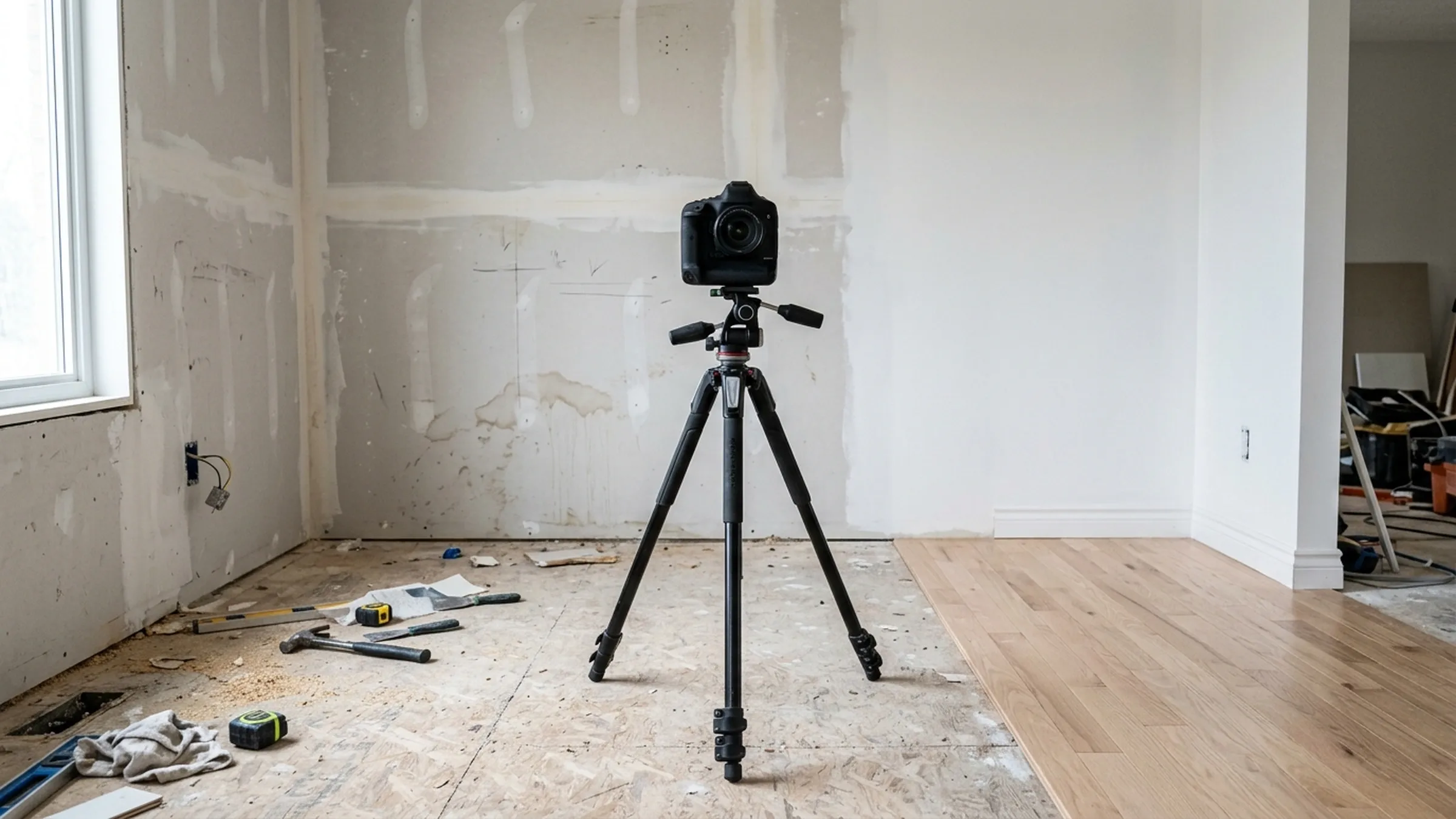
- Same spot. Stand in the same place, at the same height, pointed the same way. Mark the spot on the floor with tape or take a reference photo, then use it again.
- Same framing. Keep the same lens setting and the same rotation.
- Same light. Turn the lights on, or off, the same way. Shoot at a similar time of day.
- A clean frame. Move tools and equipment out of the shot for the after, but do not hide the damage in the before.
- Take more than two. A during shot, with the drying equipment running, shows the work and answers "what is that machine for?"
Protect your customer
Ask first, in writing
A short release that says what you will show, where, and for how long. Keep it with the job file.
Leave out what identifies them
No house numbers, mail, family photos, or license plates. Say the town, not the address.
Show the property, not their loss
Personal items and anything that shows a private moment stay out of frame.
Let them say no
A customer who declines is not a problem. A customer who was posted without asking is.
What should you say next to the photos?
Tell people what was done in plain words: what the damage was, what you did, and about how long it took. "Kitchen after a dishwasher leak: water removed the same day, dried in four days, cabinets saved" is useful. "Amazing transformation!" is not. Add alt text that describes the picture, for people who use screen readers, and for search engines.
What must you never do?
- Pair a before from one job with an after from another.
- Show a staged or stock image as your own work.
- Promise that a result like this is what every customer will get. Every job is different, and the caption should not suggest otherwise.
Where should the pairs go?
On the matching service page, in a gallery on your site, on your Google Business Profile, and in a short video walkthrough of the job. One good pair on the page for that service is worth more than a big gallery nobody looks at.
If you want help turning your jobs into content that can be found and trusted, see For restoration companies.