By Restoration Advertising · 09/30/2026
Smoke and Soot After a Nearby Wildfire
A wildfire miles away can leave smoke, ash and odor in a house the fire never touched. How it gets in, what EPA and CDC advise, and when to call a professional.
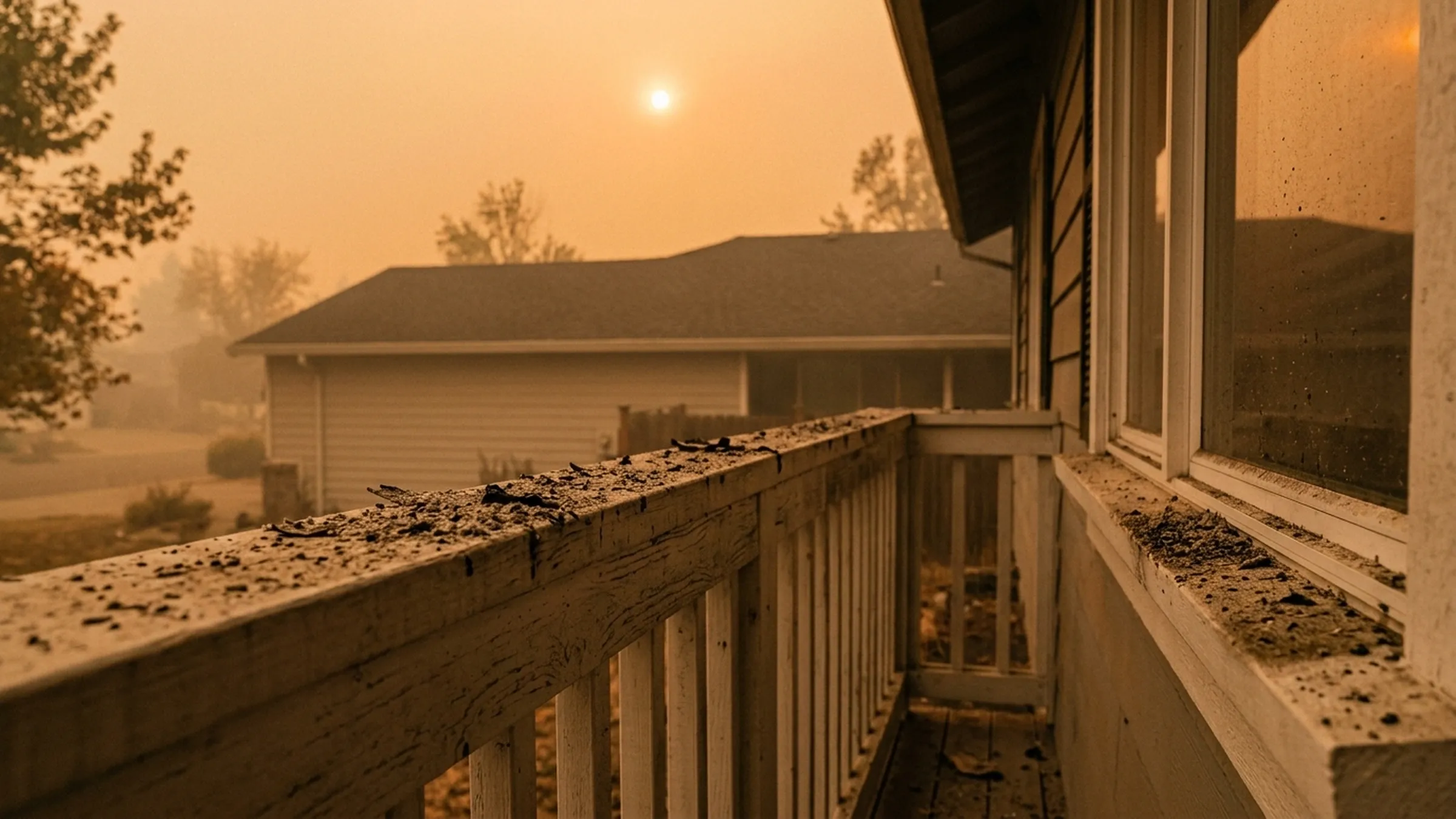
How does wildfire smoke get into a house that did not burn?
The EPA lists three routes: open windows and doors, mechanical ventilation such as bathroom and kitchen fans, and infiltration, which is air leaking through small openings, joints and cracks around closed windows and doors (EPA: Wildfires and Indoor Air Quality, updated September 2, 2026). A house can be sealed fairly well and still take in smoke over days.
Once inside, particles settle on surfaces and work into fabric and porous materials. FEMA's smoke damage guide for homeowners says soot and ash can damage porous materials such as upholstery and clothing, making them nearly impossible to clean (FEMA: Homeowner's Guide to Risk Reduction and Remediation of Residential Smoke Damage, revised April 2025).
What are ash and soot?
The EPA describes ash as made up of large and tiny particles, including dust, dirt and soot (EPA: Protect Yourself from Ash, updated July 28, 2026). It says ash from burned structures can carry more harmful chemicals than ash from vegetation alone. Smoke from a distant fire is often mostly fine particles and odor, but you may also find a film of ash on window sills, cars and outdoor furniture.
What are the health cautions?
The CDC says wildfire smoke irritates the eyes, nose, throat and lungs, and that children, pregnant people and people with conditions such as asthma, COPD or heart disease are at higher risk (CDC: How Wildfire Smoke Affects Your Body, page undated). The EPA says to make a plan with your health care provider to protect your health during a wildfire smoke event (EPA: Wildfire Smoke and Health, updated July 23, 2026). If someone in your home has a chronic condition, ask their doctor what to do.
Keeping the air inside cleaner
Close up and recirculate
The EPA advises setting the HVAC system to recirculate, or closing the outdoor air intake, when smoke is present. Keep windows and doors closed.
Use a better filter
The EPA suggests an HVAC filter rated MERV 13, or as high as your system fan and filter slot can accommodate. Check what your system can handle.
Add a portable air cleaner
A HEPA air cleaner filters one room. The EPA says to choose one that does not produce ozone, and describes setting up a cleaner air room in the home.
Avoid adding indoor smoke
The EPA advises against candles, incense, gas appliances, frying at high heat and vacuuming unless the vacuum has a HEPA filter.
Wear the right respirator outdoors
The EPA and CDC point to NIOSH-approved N95 or similar respirators that fit snugly. Surgical masks and one-strap dust masks are not designed to seal to the face.
Check the filter often
Smoke loads a filter faster than ordinary dust, so look at yours more often than usual and replace it when it is dirty.
Can you clean it yourself?
For light ash and dust, often yes. The EPA says to avoid dry sweeping and leaf blowers, mist hard surfaces with water to keep dust down, then wet mop or use a damp cloth (EPA: Protect Yourself from Ash, updated July 28, 2026). If you use a vacuum, use a HEPA vacuum; with a standard vacuum, the EPA says to wear a respirator and run air cleaners at the same time. The EPA advises that people with heart or lung disease, older adults and pregnant people avoid cleanup, and that children stay away until it is finished (EPA).
The EPA recommends cleaning air ducts only as needed, and says to consider it if the ducts are clogged with excessive amounts of dust and debris (EPA: Wildfires and Indoor Air Quality, updated September 2, 2026). You can read more about why the smell can return in Smoke Damage You Can't See, and Why the Smell Comes Back. Ducts are covered in the air duct cleaning listings.
What do insurers often ask for?
It depends on your policy, and smoke-only claims can be treated differently from fire claims. Expect to be asked for photos or video taken before cleaning, a list of affected items, receipts for cleaning and supplies, and any reports from a cleaner. FEMA's smoke damage guide suggests keeping a log of the dates, times and names of the people you speak to (FEMA: Homeowner's Guide to Risk Reduction and Remediation of Residential Smoke Damage, revised April 2025). Read Documenting Your Loss Before the Cleanup Starts and The Adjuster's Visit and Choosing Your Restoration Company. This is general information, not legal or coverage advice. Ask your insurer what applies to you.
When should you call a restoration company?
FEMA's guide describes heavy soot and ash on surfaces and floors, with visible airborne particles and a noticeable smoke odor, as the case for retaining a professional cleaning or restoration contractor if detailed cleaning steps are unsuccessful (FEMA: Homeowner's Guide to Risk Reduction and Remediation of Residential Smoke Damage, revised April 2025). See also what can be saved after a house fire.
What should you ask before you hire?
- How will you find out where the smoke went, including the ducts and attic?
- What will be cleaned, what will be replaced, and how will you confirm the odor is gone?
- Will you give me a written estimate and a report I can give my insurer?
- What do you do about the HVAC system and its filters?
- Do you guarantee results you can't measure, such as no smell at all?
You can browse fire and smoke damage restoration companies in the directory. The directory lists companies and does not vet or rate any of them, so ask the questions above of every company you call.