By Restoration Advertising · 11/18/2026
Winter Home Fires: Heaters, Candles and Fireplaces
NFPA, USFA and CPSC numbers on space heater, candle and chimney fires, what to do about each, CO alarms, and what a furnace puff-back leaves behind.
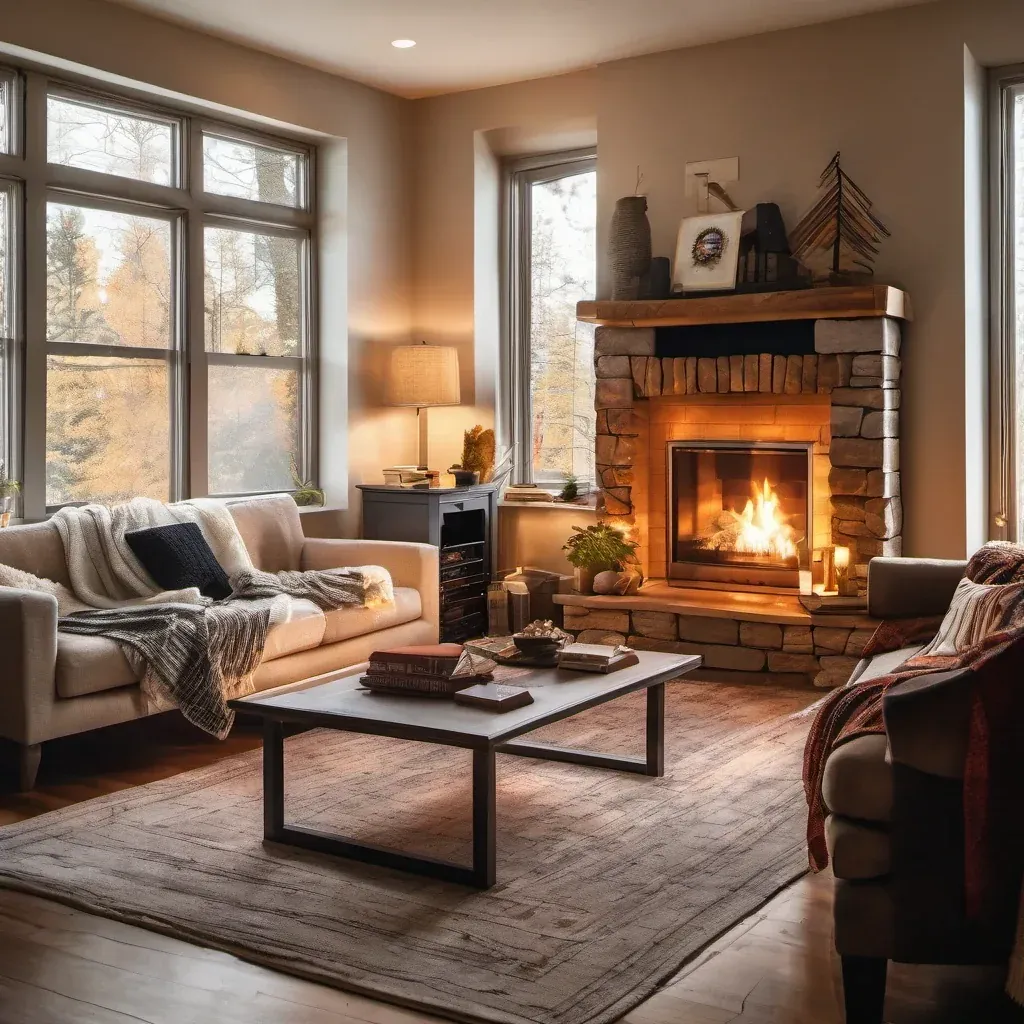
Heating equipment, candles and chimneys all peak in the same few months. NFPA reports that 46% of home heating fires happen from December through February, and candle fires peak in December (12%) and January (10%) (NFPA: Heating safety; NFPA: Winter holidays). Space heaters cause a minority of heating fires but 73% of the deaths in NFPA's latest count (41% of fatal fires in USFA's portable-heater count), so the 3-foot rule and turning heaters off at night are the two habits the numbers point to.
How dangerous are space heaters, by the numbers?
In 2020–2024, US fire departments responded to an estimated 37,365 home heating fires a year, 11% of reported home fires, with about 417 deaths, 1,260 injuries and $1.2 billion in damage annually. Space heaters and heating stoves caused 30% of those fires but 73% of the deaths and 70% of the injuries (NFPA: Heating safety).
The pattern holds in every dataset, even though the agencies count differently:
| Source and years | Space heaters' share of heating fires | Share of the deaths |
|---|---|---|
| NFPA, 2020–2024 (space heaters and heating stoves) | 30% | 73% of heating fire deaths |
| NFPA "Home Heating Fires" report, 2016–2020 | 33% | 88% of heating fire deaths |
| USFA, 2017–2019 (portable heaters only) | 3% | 41% of fatal heating fires |
Sources: NFPA: Heating safety; NFPA: Home Heating Fires (PDF), Richard Campbell, December 2022; USFA: Heating Fire Safety, reviewed May 4, 2023.
The figures differ because NFPA counts fixed and portable heaters together while USFA's figure is portable heaters alone, and the years differ. In every count, space heaters are a minority of fires and the largest single share of deaths.
Timing explains part of it. In the 2016–2020 report, only 13% of heating fires started between midnight and 6 a.m., but those fires caused 43% of the deaths. Our reading, not NFPA's: people are asleep and slower to notice.
Why do candle fires spike in December?
Decorations. NFPA's 2020 "Home Candle Fires" report (Marty Ahrens, covering 2014–2018) found that 12% of December candle fires began with decorations, against 4% the rest of the year, and that Christmas averaged 58 candle fires, almost three times the daily average (NFPA: Home Candle Fires (PDF), May 2020). NFPA's Winter holidays page says candles started 49% of home decoration fires in December, compared with 33% year-round.
The current numbers, for 2020–2024, are about 5,894 home candle fires a year, 63 deaths, 532 injuries and $286 million in damage (NFPA: Candle safety). Over half started because something that can burn was too close to the flame. 36% started in a bedroom. Sleep was a factor in only 11% of candle fires but 34% of candle fire deaths.
What about chimneys and creosote?
Burning wood leaves a residue on the inside of the flue that the Chimney Safety Institute of America describes as creosote: black or brown, crusty, tar-like or shiny, and highly combustible. Unseasoned wood, a restricted air supply and a cooler-than-normal flue speed the buildup, and CSIA warns that "the majority of chimney fires go undetected" (CSIA: Preventing Chimney Fires).
NFPA's 2016–2020 tables show both sides. Fires confined to the flue were 30% of heating fires, about 13,120 a year, with almost no deaths. Fires that escaped the flue were 7% of heating fires but 22% of heating fire property damage, about $234 million a year (NFPA: Home Heating Fires Supporting Tables (PDF), December 2022). CSIA lists cracked or collapsed flue tiles and warped metal parts among the signs a sweep looks for after a chimney fire nobody saw.
What should you do about each risk?
| Risk | Why it matters | What to do |
|---|---|---|
| Space heater too close to things that burn | Space heaters are the largest single share of heating fire deaths | Keep anything that can burn at least 3 feet away, including bedding, curtains and furniture (USFA: Heating Fire Safety; CPSC) |
| Space heater left running | Overnight heating fires cause a disproportionate share of deaths | Turn it off when you leave the room or go to bed; never leave one on while sleeping (NFPA: Heating safety; CPSC) |
| Heater on an extension cord or power strip | CPSC advises against it | Plug electric heaters directly into a wall outlet, not an extension cord or power strip (CPSC: CPSC Warns Consumers to be Cautious When Using Space Heaters, Furnaces and Fireplaces This Winter, January 5, 2023) |
| Fuel-burning heater refueled while running | CPSC says these heaters should never be refueled in use | Turn it off and let it cool before refueling; use only the fuel the maker specifies (CPSC; NFPA report) |
| Using the oven for heat | NFPA and USFA both list it as a never | Never use an oven to heat the house (NFPA report; USFA) |
| Candle near décor or bedding | Over half of candle fires start this way | Keep candles at least 12 inches from anything that can burn; blow them out when you leave the room or go to bed; consider flameless candles (NFPA: Candle safety) |
| Creosote in the chimney | Highly combustible and often unnoticed | Have chimneys and heating equipment inspected and cleaned every year before the season (NFPA; USFA; CSIA) |
| Embers and ashes | Embers can fly from an open fireplace into the room | Use a sturdy fireplace screen; make sure ashes are cool before they go in a bin (NFPA report) |
| Children near heat | NFPA's report recommends its own zone for children | Keep a 3-foot "kid-free zone" around fireplaces and space heaters (NFPA: Home Heating Fires report) |
Where do carbon monoxide alarms go?
Gas- and oil-burning furnaces are among the household sources of carbon monoxide CDC names. CDC estimates more than 400 Americans die each year from unintentional CO poisoning not linked to fires, more than 100,000 visit an emergency department and more than 14,000 are hospitalized. Symptoms are often described as "flu-like," and someone asleep can die before noticing any (CDC: Carbon Monoxide Poisoning Basics, updated October 26, 2026).
- Placement: on every level of the home and outside sleeping areas (CPSC, 2023).
- Power: battery-operated or with battery backup, so they work in a power outage (CPSC).
- Interconnected is best: when one sounds, they all sound (CPSC).
- Test monthly, and replace batteries at least once a year, or use alarms with sealed 10-year batteries (CPSC). CDC suggests checking batteries when the clocks change and replacing the detector about every five years or as the maker directs.
- Service the heating system yearly and have the chimney checked or cleaned every year, since a blocked flue can push CO back indoors (CDC).
If a CO alarm sounds, get everyone outside into fresh air and call 911 from there.
What does a furnace or fireplace puff-back do to a house?
A furnace puff-back is a small explosion inside the heating system. Washington's Office of the Insurance Commissioner describes the result as fuel or oil residue: a greasy, dark film (Washington OIC: Smoke damage and your homeowner or renter insurance). Smoke that backs up from a fireplace into the room is smoke damage too, and the same cleanup and insurance points below apply.
The damage is rarely confined to one room. The same page notes that smoke particles travel through heating and air conditioning ducts, carrying soot and odor through the house, which is why a puff-back in the basement can mean residue upstairs. Our guide to smoke damage you can't see, and why the smell comes back covers why.
Is a puff-back covered by insurance?
Often, but it depends on your policy and your state. Washington's insurance regulator says standard policies typically cover sudden and accidental smoke damage, and that coverage is for sudden accidents, not ongoing problems such as chimney maintenance. That is one state's regulator describing typical policies; other states and your own policy may differ. Whether a puff-back counts as sudden or as neglected maintenance is a question for your policy wording and your adjuster. Your state insurance department can explain your rights.
What the same page advises applies anywhere:
- Photograph and video everything before cleaning (how to document a loss before cleanup).
- Do not throw anything away until the adjuster has inspected.
- Ask for a full smoke inspection that includes the HVAC system.
- Ask which items need cleaning and which need replacing.
- If odor or residue shows up later, ask for a reinspection; smoke damage can be progressive.
When should you call a professional?
Call 911 for any fire that is not out, a chimney that is roaring or throwing sparks, or a CO alarm. Call a heating technician before restarting a furnace after a puff-back, and a certified chimney sweep after a suspected chimney fire. For soot through the house, a fire and smoke restoration company can clean the ducts and surfaces together; know what to ask at the adjuster's visit and when choosing a restoration company.
Researched and drafted with AI, then reviewed and edited by the site's editors.