By Restoration Advertising · 11/12/2026
Ice Dams: Why They Form and How to Handle One Safely
Why ice dams form, how to deal with one without climbing the roof, where to look for water inside, and how to tell if your policy covers it.
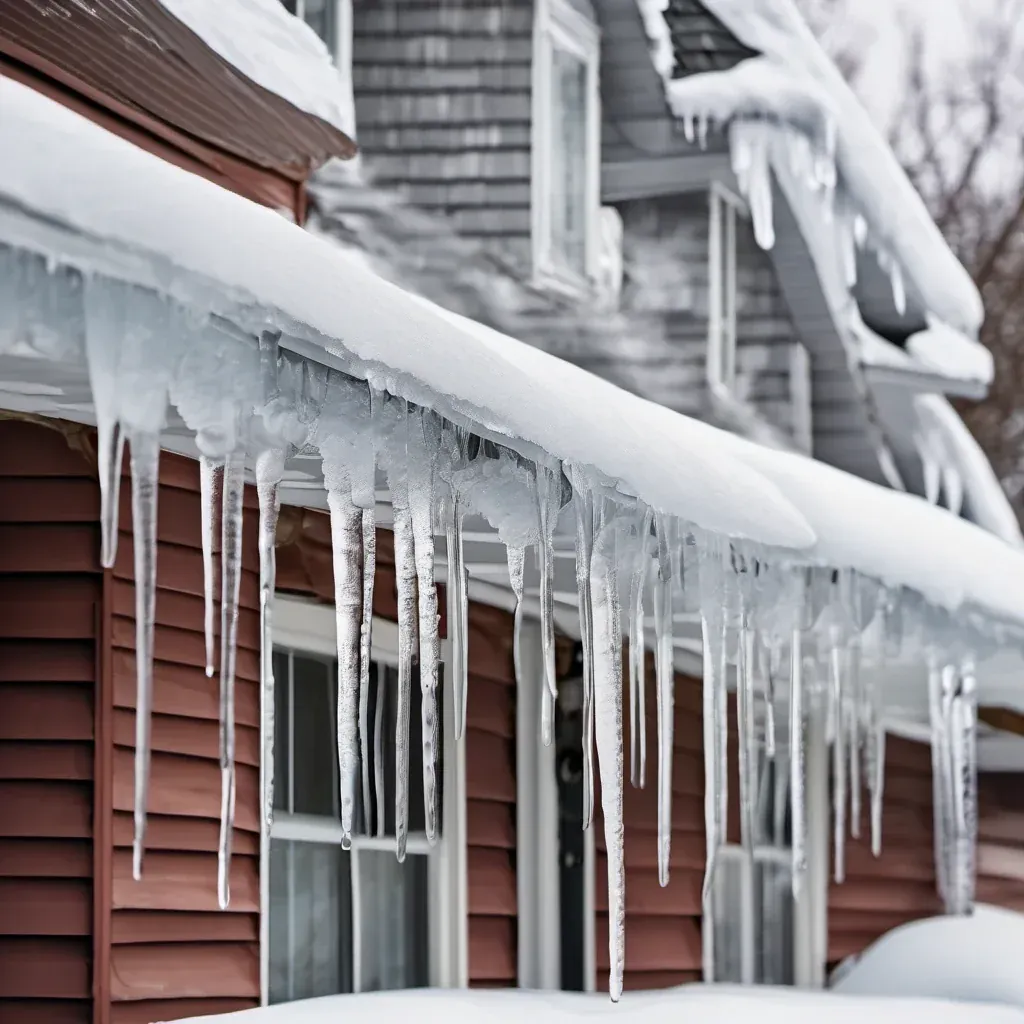
An ice dam forms when heat escaping from the house melts snow on the upper roof and the water refreezes at the cold eave, building a ridge that traps the next round of meltwater. The safe response is to take snow off from the ground with a roof rake, never to climb an icy roof or chip at the ice, and then to fix the heat loss that caused it.
Interior water from an ice dam is often covered, but your own policy decides.
Why do ice dams form?
The University of Minnesota Extension puts the condition plainly: the higher parts of the roof surface must be above 32°F while the lower edge stays below freezing (University of Minnesota Extension: Dealing with and preventing ice dams, reviewed 2022). The warm upper roof makes the water; the cold overhang freezes it.
The heat comes from the house, not the sun: Extension says sun heat rarely causes the temperature difference, and warm indoor air leaking into the attic is usually the biggest contributor. Once the dam is there, the Insurance Institute for Business & Home Safety (IBHS) notes that its growth can force backed-up water under the shingles (IBHS: IBHS Offers Guidelines to Help You Stop Ice Dams, January 9, 2018), so a dam can leak through a roof that is otherwise sound.
How much weight does an ice dam add to the eaves?
The top search results rarely mention weight. FEMA's snow load guide says an ice dam creates a concentrated load at the eaves, and that one inch of ice weighs a little less than 5 pounds per square foot (FEMA: Snow Load Safety Guide, FEMA P-957, January 2013).
Our arithmetic on FEMA's figure, with example dimensions we picked (not a measurement or an engineering check):
- A strip of ice 3 feet deep along 40 feet of eave covers 3 × 40 = 120 square feet.
- At 4 inches thick, 4 × 5 = about 20 pounds per square foot (slightly less, since FEMA's figure is "a little less than" 5).
- 120 × 20 = about 2,400 pounds sitting on the lowest edge of the roof.
Real dams vary, and neither FEMA's guide nor this article says what weight your roof can carry. The point is the order of magnitude.
Does powered attic ventilation fix ice dams?
Not by itself. Extension says mechanical (powered) attic ventilation is "not a recommended solution to ice dams in Minnesota," because it can cause attic moisture problems and negative pressure in the house.
The order that works, per Extension: seal air leaks from the house into the attic first, then consider adding insulation. Published guidance on how much insulation differs:
| Source | Guidance for attic insulation | Date |
|---|---|---|
| NDSU Extension: Reduce ice dam and icicle damage | Roughly 15 inches of blown-in insulation, or R-50, for northern attics | January 4, 2023 |
| UMass Amherst BCT: Preventing Ice Dams | At least R-38 for northern U.S. homes (the page itself is marked archival) | 2011 |
We do not pick between them. ENERGY STAR's quick check: insulation level with or below the joists probably needs more; if you cannot see the joists, you probably have enough. For an exact answer, compare your measured R-value with the recommended level for your climate zone.
How do you find the air leaks?
ENERGY STAR describes a smoke test for finding leaks (ENERGY STAR: DIY checks and inspections):
- Pick a cool, windy day. Turn off gas furnaces and water heaters; shut windows, exterior doors and fireplace flues.
- Run exhaust fans that vent outdoors, so the house pulls air in through its leaks.
- Pass an incense stick, or dust talcum or baby powder, around likely leak sites, such as light fixtures. A damp hand also works, because leaks feel cool.
- Smoke that wavers, or is drawn toward a spot, marks a leak. Mark each one and seal it before you add insulation.
In the attic, ENERGY STAR's flashlight check looks for light coming through gaps. Two cautions from the same page: vermiculite insulation may contain asbestos, so do not disturb it, and walk only on the joists. We would skip the flame in an attic and use the powder or a damp hand. For a measured result, Extension recommends a blower door test, sometimes with an infrared camera.
How do you deal with an ice dam safely?
Stay off the roof. Extension warns that anyone on a roof in winter, or working on it from below, risks injury. NDSU Extension says to use a roof rake instead, and to watch for overhead power lines.
What is safe to do yourself
- Rake snow from the ground. A long-handled roof rake removes the snow that feeds the dam. IBHS suggests wheels; Extension notes rakes can damage roofing.
- Keep gutters clear before the season. The Insurance Information Institute (Triple-I) advises clearing gutters so meltwater can run off (Triple-I: Mitigation Reduces Winter Weather Risks, December 18, 2024).
What not to do
- Do not chip, pick or hammer the ice. The UMass article says more damage is done to "life, limb and roof" that way.
- Do not use rock salt. University of Maryland Extension's deicer table shows sodium chloride stops working around 18°F, and it and calcium chloride both damage concrete and metal and harm plants (University of Maryland Extension: Melting Ice Safely, updated January 5, 2024).
What should a professional do instead?
When water is already coming in, Extension's emergency step is cutting channels through the dam, for example with tap water on a warm day; they help only for days. That is work at the roof edge, so hire it out.
| Option | What it does | Limit |
|---|---|---|
| Professional snow and ice removal | Clears snow and opens the dam | IBHS: hire an established, licensed and insured professional |
| Heating cables on eaves, gutters and downspouts | Keeps drainage channels open | IBHS: they will not remove an existing dam; use cables that are UL Listed, FM Approved or CSA Certified, professionally installed |
| Air sealing, then insulation | Removes the cause | Extension: the long-term fix |
How do you tell water is getting inside?
In our description, water backs up into the attic, then runs into exterior walls or through ceiling insulation and stains the ceiling. That tells you where to look:
- Attic, along the eaves: wet or matted insulation, damp sheathing, frost on the underside of the roof deck
- Ceilings and exterior walls: stains, soft or sagging drywall, damp spots high on the wall
- Outside: ice building on the eave above the wet area inside
Our caution, not a sourced finding: the stain you can see may not be all of the wet material, because insulation and wall cavities hold water. Extension says to dry ceilings and walls before repairing interior finishes, and to correct the heat loss at the same time or the damage will recur. See the first 24 hours after water damage for drying.
Is ice dam water damage covered by insurance?
Often, but it is policy-specific. Triple-I says policies provide coverage for "damage resulting from ice dams on your roof" (Triple-I: How to protect your home from water damage), and that losses from failing to care for a home are not covered (Triple-I: Home buyer's insurance guide).
The Vermont Department of Financial Regulation draws the same line: it lists ice dams caused by ice and snow among covered water losses, and water damage from lack of maintenance and neglect among the uncovered ones, adding that homeowners coverage is for water damage that is "sudden and accidental" rather than gradual (Vermont DFR: How do insurance policies respond to different water-related disasters?, revised April 2026). One regulator describing typical policies is not your policy.
What should you search for in your own policy?
Search the policy for these words:
| Search for | What you are checking |
|---|---|
| "ice" and "snow" | Whether ice dams or the weight of ice and snow are named as covered, or excluded |
| "sudden and accidental" | Vermont's regulator uses this phrase; a slow, repeated leak may be treated differently |
| "maintenance" and "neglect" | The exclusion for failing to care for the home |
| "seepage," "leakage," "wear and tear" | Our additions: common exclusion words; we found no regulator tying them to ice dams, so ask your insurer |
| "deductible" (declarations page) | The deductible for this loss, and whether the roof is paid at full or depreciated value |
Ask your insurer whether removal of the dam itself is covered or only the damage it caused, before you pay for removal.
The NAIC says to notify your insurer right away and that the time you have to report a claim varies by state (NAIC: What you need to know when filing a homeowners claim). Our own advice: stop further damage and keep receipts. Documenting your loss before the cleanup starts lists what to photograph. If you disagree with a decision, your state insurance department handles complaints; the NAIC keeps a directory.
When should you call a professional?
- Water is coming through a ceiling or wall: a restoration company to find and dry the wet materials, and your insurer.
- The dam needs opening: a licensed, insured snow and ice removal contractor or roofer.
- The ceiling sags, you hear popping or creaking, or doors and windows stop opening or closing: FEMA: Snow Load Safety Guide, FEMA P-957 lists these as warning signs and says the building should be promptly evacuated and a qualified design professional contacted. Get everyone out first.
Researched and drafted with AI, then reviewed and edited by the site's editors.