By Restoration Advertising · 09/30/2026
Frozen and Burst Pipes: Prevention and the First Hour
Which pipes freeze first, how to protect them in a cold snap, how to thaw one safely, and what to do in the first hour after a pipe bursts.
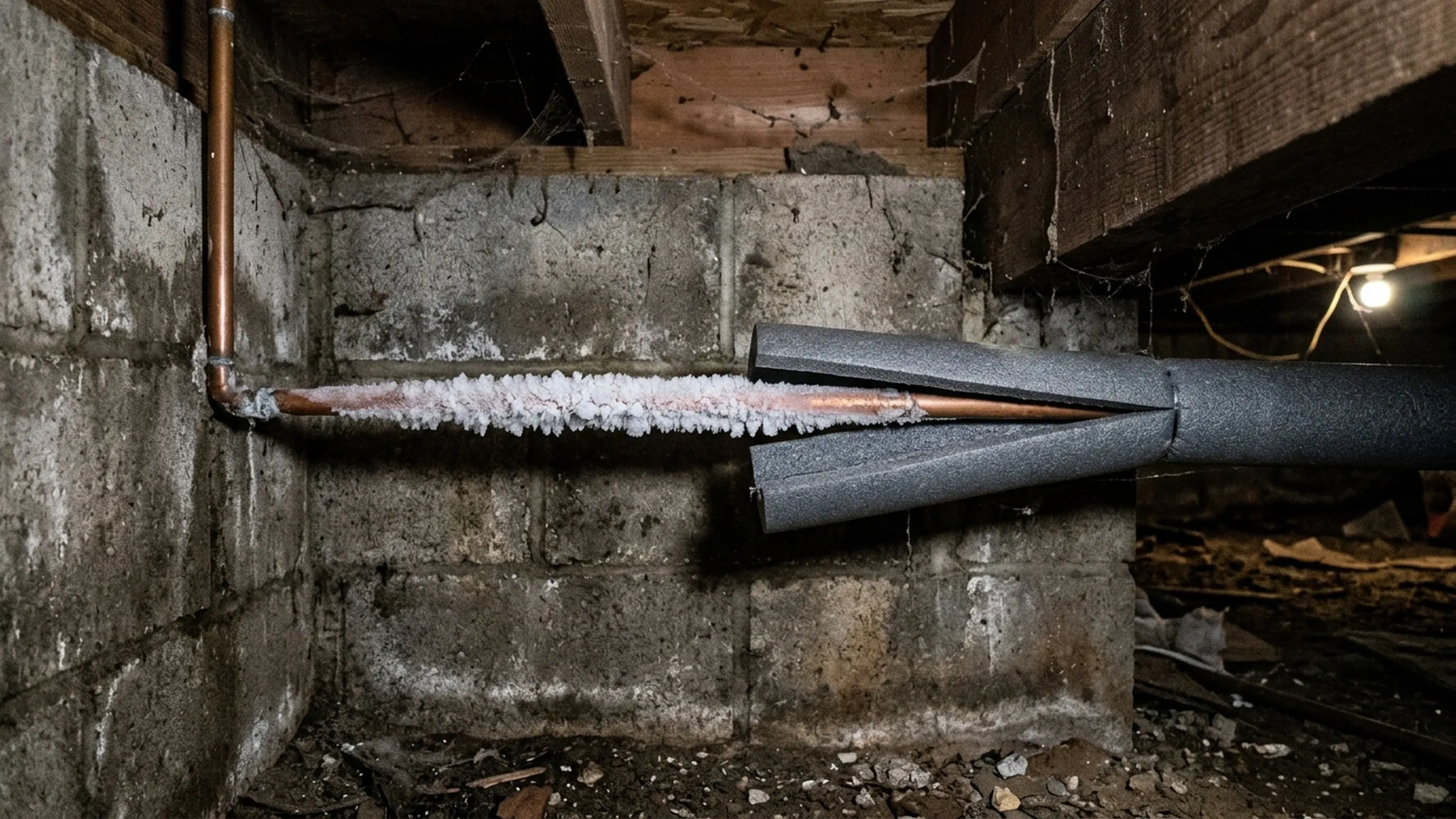
Which pipes are most likely to freeze?
Pipes in places that get cold and stay cold. The Red Cross names water supply pipes in unheated interior areas such as basements, crawl spaces, attics, garages and kitchen cabinets, and pipes that run against exterior walls with little or no insulation (Red Cross: Preventing & Thawing Frozen Pipes, page undated). Pipes with little or no insulation are at the most risk, and so are outdoor hose connections.
What should you do before a cold snap?
Most of it takes an afternoon. Insulate exposed pipes with materials made for that purpose, seal air leaks near them, and disconnect garden hoses. Turn off the inside valve to each outdoor hose bib and open the outside bib so the line can drain.
Also find your main water shutoff now. Everyone in the house should know where it is and how to close it, because that is the single step that limits the damage when a pipe fails.
What should you do while it is freezing?
Keep the heat on at the same setting day and night, open cabinet doors on exterior walls so warm air reaches the pipes, and let cold water drip from a faucet served by exposed pipes. Keep the garage door closed if there are supply lines in the garage. If you will be away in cold weather, the Red Cross says to leave the heat on, set to a temperature no lower than 55 degrees Fahrenheit. Ask your insurer too, because some policies expect you to keep the home heated.
A cold-snap checklist
Insulate
Wrap exposed pipes in attics, crawl spaces, garages and along outside walls with insulation made for pipes.
Seal drafts
Caulk or weatherstrip the gaps where cold air reaches plumbing, such as where lines pass through walls.
Hoses and outdoor bibs
Disconnect hoses, close the inside valve to each outdoor bib and open the outside bib to drain it.
Keep the heat on
Hold a steady temperature day and night, and do not turn it far down when you leave.
Let faucets drip
A slow trickle of cold water on faucets with exposed pipes keeps water moving.
Open the cabinets
Open the doors under kitchen and bathroom sinks on outside walls so room air can warm the pipes.
What if a pipe is frozen but has not burst?
If a faucet gives only a trickle, suspect a frozen pipe. Keep that faucet open and, if you can, shut off the main supply first. Warm the pipe gradually, starting near the faucet and working back toward the coldest section. An electric heating pad, a hair dryer, or towels soaked in hot water all work, and a portable space heater can too if it stays away from anything flammable (Red Cross). Keep electric devices away from any water.
Never use a torch, a kerosene or propane heater or any other open flame. Call a plumber if you cannot reach the frozen section or it will not thaw, and check your other faucets, because one frozen pipe often means more.
What do you do in the first hour after a pipe bursts?
- Shut off the water at the main. Open a few faucets to drain what is left in the lines.
- Stay away from electricity and water together. Do not touch electrical equipment if it is wet or you are standing in water. If water is reaching outlets or the panel, stay out and call an electrician or your utility.
- Photograph and video the damage and the broken pipe before anything is moved. See documenting your loss.
- Call your insurer promptly and a plumber for the repair.
- Call a restoration company to remove water and dry the structure. See the first 24 hours.
Plumber or restoration company?
Both, usually. The plumber fixes the pipe, and the restoration company deals with the water it released (see plumber or restoration company first and what drying involves).
Questions to ask any company you call
- How soon can you be here, and who will be on site?
- Will you measure moisture and log it at each visit?
- Can I have a written estimate, and what could change it?
- Do you repair plumbing, or only handle the water?
- Will you share photos and readings with my insurer?
You can browse plumbing companies and water damage restoration companies in the directory. The directory lists companies and does not vet or rate any of them, so ask the questions above of every company you call.